
Artificial intelligence (AI) has transformed the pace, density, and deployment expectations of modern computing. Traditional data centers remain the backbone of global digital infrastructure and continue expanding at record levels. But as AI workloads evolve, so has the demand for purpose-built modular platforms that can bring capacity online faster and closer to where compute is needed.
This shift isn’t about replacing large-scale, stick-built campuses. It reflects a parallel approach, where traditional construction and modular delivery coexist to support AI and IT applications in real time.
FROM WHITE SPACE TO DISTRIBUTED “DATA FABRIC”
Historically, data centers were built with excess white space to accommodate gradual expansion. Today, AI workloads operate more like production systems that require immediate, dense, and continuous access to compute.
The key metric is no longer just megawatts delivered, but time-to-capacity—and increasingly time-to-token, the speed at which organizations can train or deploy new models.
Modular platforms align with this shift by providing pre-engineered, factory-tested capacity in months rather than years. They offer strategic advantages where speed, density, or geographic placement are essential.
THE EVOLUTION OF MODULAR
About 15 years ago, I led a team that developed one of the first modular data centers. Those early systems—often built from repurposed shipping containers—lacked the sophistication, supportability, and reliability of traditional facilities. We learned quickly that modifying a container to function as a data center created more challenges than benefits. Today’s modular systems bear little resemblance to those early experiments. Modern platforms are purpose-engineered environments with integrated:
- Power distribution
- Liquid and hybrid cooling
- High-density rack layouts
- Network and fiber pathways
- Monitoring, controls, and facility integration
For operators seeking an alternative to traditional construction, modular systems offer faster deployment, factory-built precision, and repeatable quality. It provides a flexible and scalable option for adapting to changing workload demands.

WHY AI IS ACCELERATING MODULAR ADOPTION
AI has exposed new infrastructure gaps that modular can help address, which are reflected in market projections showing double-digit growth in the modular segment beyond 2030. Key drivers include:
- Rack densities routinely exceeding 50–250kW.
- Liquid cooling becoming standard for training and advanced inference.
- Rapid GPU refresh cycles mismatched with 20-year building horizons.
- Need for distributed compute for inference, industrial AI, and edge applications.
- Opportunities to utilize stranded power in legacy or remote facilities.
As AI architectures diverge, the infrastructures required to support them are diverging as well.
TWO MODULAR PLATFORMS EMERGING FROM AI DEMAND
Across the industry, two primary modular deployment patterns have emerged:
- Training / Learning Platforms: Multi-megawatt systems designed for dense compute clusters used in model training and high-performance compute (HPC). These platforms demand advanced power distribution, robust liquid cooling, and tight environmental control.
- Inference Platforms: Compact, edge-deployable units built for real-time decision-making—ideal for video processing, industrial automation, and localized AI applications.
Inference modules can also take advantage of distributed or constrained locations, converting small pockets of stranded power into productive compute capacity.
Compu Dynamics Modular (CDM)’s platforms follow this industry shift—with dedicated training modules (Series L) engineered for multi-megawatt AI clusters and lightweight inference modules (Series I) tuned for distributed, high-density edge compute.
INDUSTRIES WHERE MODULAR IS MAKING AN IMPACT
Modular data centers are proving especially effective in sectors that need rapid deployment, localized compute, or flexible placement, including:
- AI and HPC research labs where rapid deployment enables experimentation and model integration.
- Telecom operators that are expanding distributed and edge services.
- Healthcare systems are processing imaging and diagnostics locally.
- Automotive R&D that is accelerating autonomous vehicle testing.
- Universities that are scaling research computes without major construction.
- Energy and industrial sites that are leveraging remote or stranded power.
In each case, modular centers serve as a complement to centralized data center strategy—not a replacement.
DESIGN CHALLENGES AND CONSIDERATIONS
Designing modular platforms for AI requires solving the same engineering challenges as large facilities, but within smaller, integrated footprints:
- Liquid cooling design and integration
- High-density power strategies
- Fiber routing and network topologies
- Redundancy across electrical and cooling systems
- Transport, placement, and commissioning coordination
- Compliance with standards like UL2755
LOOKING AHEAD: PARALLEL TRACKS TO A DIGITAL FUTURE
Modular platforms isn’t the right solution for every organization or every site. But for those facing rapid AI growth, remote deployments, constrained energy environments, or unpredictable density requirements, it offers a measurable advantage.
Traditional data centers and modular platforms are now progressing on parallel tracks, each serving distinct but increasingly complementary roles in an AI-driven world. Success will depend on aligning the right infrastructure with the right workload, whether centralized, distributed, modular, or hybrid.
At CDM, this perspective guides our work as we design modular solutions tailored to the power, cooling, and density requirements of modern AI applications.
ABOUT THE AUTHOR
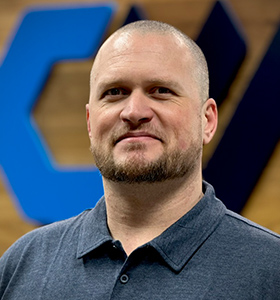
Ron Mann has over 25 years of experience in product design, project development, and manufacturing, including many innovations in product design for data center infrastructure. He helped develop one of the first containerized data centers in the early 2000s. His unique understanding of IT applications, data center infrastructure, and modular data center technology and design helps him align client expectations and delivery of sustainable solutions for data center, edge, cloud, colocation, and customized modular construction.