On key responsibilities at EdgeConneX:
My number one responsibility, first and foremost, surrounds the customer experience from initial engagement all the way through the full customer life cycle, including billing and renewal as things come up down the road. The initial part—the go-to-market, the go-to-customer—is especially central to that. So, if you break that down, new sales, bookings, and renewals as well as things like quarterly service and quarterly business reviews with our customers are all key customer touch points that fall under my organization.
On the EdgeConneX customer profile:
The primary component of our go-to-market is the hyperscale segment which is made up of cloud, AI and now neocloud customers. As we progressed and expanded our data center offerings from Edge, to Hyperscale, we are now supporting AI factories with gigascale sized campuses. If I had to summarize the common characteristic, I would say we’re wholesale oriented as we work to provide our service provider customers with the optimal data center and power solutions, from hyper-local to hyperscale, that enables them to best serve their end users around the world.
On the translation of “hyperlocal to hyperscale” into his role and priorities:
Customer intimacy is a big one. We put a lot of emphasis on being aligned with our customers and their needs, so we want to be able to understand their prospects, growth, and profiles and be informed about what they may need next (and where) so we can prepare and act accordingly. In addition to providing capacity in the optimal location for our customers, we also want to make sure our solutions are flexible and scalable to not only support their current needs but also to adapt to future deployments. Particularly in the era of AI with the rapidly scaling densities, it’s important that our solution will be able to support future rack densities and variable cooling technologies. Again, that’s where close coordination with our customer’s and technology ecosystem partners is critical.

On approaching go-to-market for new markets:
When we are entering new markets and new communities, we put a lot of early energy into community outreach and relations. We may be the first data center operator in the area, or it may just be a first for us, but either way, we want to enter a space understanding not just the typical data center components (like land, power, and permitting) but also be sensitive to the sentiment of the community. We always ask how can we come in and be not just a user of resources but a provider for the community in the specific ways they need. We want to be a good neighbor that contributes and gives back to the community.
On what “race to scale” means and how you get there:
One of the components of race to scale involves looking down the road—say, three to five years—and providing our best view of where, globally, we think demand will be and where we see new markets forming. As we’re scouting new markets, one of the key byproducts of that effort is then being able to translate those findings to our internal partners—like our design and engineering teams—so they have an idea of where the demand will originate and how large it may be so they can plan the supply chain accordingly. The growth so far has been tremendous; you can almost take whatever numbers we used to think about on a quarterly or even annual basis and add a zero—or maybe two. It’s that level of magnitude. So, being able to help internal teams be aligned with where we think things are going is a major bridge between now and the future. At the same time, we are instilling new solutions to accelerate our time to market so that we can deliver capacity in 12 to 18 months post contract signature with the customer. Another aspect I think is crucial in this race is creating a culture and environment that retains key talent and attracts new talent. It’s exciting to be in this sector right now, so it’s a highly competitive one, and it’s important for us to be an attractive place to learn, develop, and grow. We want to create a space where individuals—not just the company—can be successful in whatever ways they wish. Again, if you think about the racing analogy, in Formula 1 it takes the entire team to be successful. It’s not just the driver, but it’s also the pit crew, it’s the sponsors, it’s the design team and engineers, and the partners. The winners in F1 are always the ones with the best team that are all focused on the checkered flag.
ABOUT DON MACNEIL
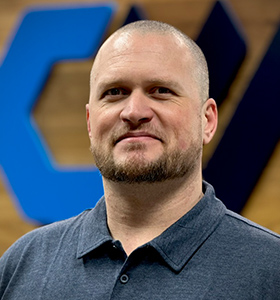
Don MacNeil is responsible for the alignment and execution of the EdgeConneX strategy and go-to-market initiatives, drawing on a strong track record of successful organizational change and operational improvement for national, international, and global businesses.
Prior to his current role, he served as Chief Operating Officer (COO) for Global Telecom and Technology (GTT), where he was responsible for network operations, service delivery, assurance and vendor management teams, and product organization. Previously, he served as COO and then as CEO at FiberLight, where he drove designing, building, and optimizing fiber optic networks. He likewise held several executive leadership roles—including COO, CMO, and Head of Customer Operations—at XO Communications and worked as Chief Technology Officer for EdgeConneX.