My most recent article, “Incubating Talent in the Era of AI,” showcased how a chance meeting led to the creation of the iMasons AI Incubator program. What was left unsaid was that this initiative represents the culmination of nearly a decade’s worth of work spanning more than a dozen companies. It also has the potential to have the most significant impact of my career.
HARNESSING ADHD AS A SUPERPOWER
One constant throughout my 36-year professional career has been a full schedule. I don’t actively seek out this kind of pace: it just seems to happen. My wife finds this amusing because every time I finish a major project or begin a new position, I state my intention to commit to fewer things. Slow down. Work smarter. Have more impact and a lighter calendar. Don’t get me wrong, I have found many ways to increase my productivity and free up more time, but despite my best efforts, my calendar inevitably fills back up. I can’t help it. I’ve accepted over the years that it’s just how I’m wired. Like many of the younger generation, I’m eternally curious. I thrive on learning new things and imagining possibilities. When I talk to people and learn more about them and what they do, patterns start to emerge. Dots start to connect. Ideas flow like water, and I become hyperfocused and engaged. Bottom line: when opportunities present themselves, I find myself compelled to explore them. Helping these ideas come to life is very satisfying to me. However, there is nothing more rewarding than when these parallel efforts start to converge. It’s simply the best kind of serendipity.
CONNECTING THE DOTS
In May of 2025, I had one of those serendipitous moments. Many of the projects I was juggling converged, forming the iMasons AI Incubator, a platform that connects students with AI tools and companies to gain realworld experience. In this situation, my parallel work efforts became complementary to each other. More importantly, when combined, they will compound the overall impact. This convergence has been almost a decade in the making. Let me walk you through how these digital infrastructure dots connected.
INFRASTRUCTURE MASONS
In April of 2016, I founded Infrastructure Masons (iMasons), an industry group focused on uniting the builders of the digital age. We structured the company as a nonprofit professional association with a focus on individuals. We leave our companies at the door and connect as professionals to help build a greater digital future. Little did I know that this idea of bringing industry friends together in a neutral forum would turn into a global organization with members representing 1.5 trillion USD in digital infrastructure across 130 countries serving the largest growth in our industry’s history.

CATO DIGITAL
In February of 2020, I stepped into my first CEO role at a startup company called Virtual Power Systems (VPS). VPS was a software platform virtualizing the power plane to drive higher utilization of data center power capacity. This was the same virtualization approach the industry had taken for compute, storage, and network. Ultimately we found the data center industry wasn’t ready for it. A little over two years in, I pivoted the company to Cato Digital, a low-cost, low-carbon, bare metal cloud provider. We found that we could use the VPS solution as our own secret sauce. By applying this solution internally, we drove our data center power utilization to more than 90 percent. We also embraced second-life hardware from the Open Compute Project (OCP) community. We redeployed retired OCP assets from Meta into data centers, passing the cost savings and carbon avoidance to our customers. We turned a waste stream into a supply chain and leveraged stranded data center power.
CATO . OCP
IMASONS CLIMATE ACCORD
In February of 2022, 40 iMasons Advisory Council members gathered at industry luminary Christian Belady’s home in Seattle, Washington, to find the one thing we could do together as an industry to battle climate change. The event, known today as Chez Belady, planted the seed for the iMasons Climate Accord (iCA), a program to reduce carbon in materials, equipment, and power. Fast forward to today and we have companies representing over eight trillion USD in combined market cap all focused on decarbonization of digital infrastructure.One of the key concepts from the origin of the iCA was a carbon label for equipment and buildings. Essentially we modeled a nutrition label concept to measure the embodied carbon in the materials used to build the data center buildings and in the equipment deployed in those facilities. Phil Lawson-Shanks, one of the attendees of Chez Belady, introduced me to his son, Rob Lawson-Shanks, who had a microfactory startup company called Molg. Their Origin Mark, a label that uses a life cycle assessment (LCA) to establish an environmental product disclosure (EPD), was the inspiration for a realworld application of this carbon label concept on OCP servers.
CATO . OCP . IMASONS CLIMATE ACCORD . MOLG
APOLO
In February of 2024, I invested in Apolo, an AI MLOps platform led by Bill Kleyman. The company is focused on helping data centers convert into AI factories to serve AI workloads. We immediately deployed the Apolo software stack onto Cato bare metal.

CATO . APOLO . OCP
THE OPEN COMPUTE PROJECT
In April of 2024, iMasons announced a strategic partnership with OCP to develop carbon accounting for hardware. This is when the first major dots started to connect for me. iMasons, ICA, OCP, Molg, and Cato. The ICA equipment workgroups partnered with the OCP carbon accounting workgroup focused on carbon disclosure. Molg also contributed its Origin Mark to help accelerate the program. Cato became the first target compute hardware platform for this work as our entire portfolio was built on second life OCP gear.
CATO . INFRASTRUCTURE MASONS . OCP . IMASONS CLIMATE ACCORD . MOLG
SIMS LIFECYCLE SERVICES
In July of 2024, Cato entered into an agreement with Sims Lifecycle Services, one of the largest ITAD vendors in the market, to deploy second-life OCP gear for Cato anywhere in the world. This partnership launched a new market offering from SLS called Rack Renew. Cato was not only the first customer, SLS embedded Cato’s bare-metal software platform to make using secondlife OCP gear easier for other customers in their data centers. SLS was also the first company to actively deploy Molg microfactories to assemble OCP servers and racks to increase yield by removing humans from the process. SLS and Cato are both members of OCP and active supporters of the carbon accounting work. Four more dots connected here.
CATO . SLS . MOLG . RACK RENEW . IMASONS CLIMATE ACCORD
NVIDIA
In October 2024, I had the chance to present at the OCP Global Member Summit and wrap with a panel highlighting the collaboration between Cato, SLS, and Molg. That same month, Cato and SLS entered into an agreement with NVIDIA to redeploy secondlife NVIDIA DGX servers reclaimed from their customer sites. There were two goals in this effort. First, free up power capacity for NVIDIA customers by pulling out old GPUs to enable the deployment of new GPUs into the same site’s power capacity. Second, prove that NVIDIA GPUs have a longer life specifically for inference workloads. I was proud to have Cato deploy NVIDIA DGX-2 GPU servers across our data center portfolio to augment the OCP bare metal and enable inference workloads at the edge in full alignment with the iMasons Climate Accord maturity model.

CATO . SLS . OCP . NVIDIA . IMASONS CLIMATE ACCORD
ONUE
In January of 2025, I co-founded a private cloud startup called Onue with Mark Dickerson. Mark and I had worked together at Nike and Oracle and saw a need to help enterprise companies keep their private data private, especially in the age of AI. Onue was built on Cato OCP and NVIDIA bare metal enabling fully isolated private cloud configurations. Onue also leveraged Apolo’s ML Ops tools platform to accelerate AI work for startups and enterprises. The turn-up of Onue connected the most dots to date.
CATO . OCP . NVIDIA . SLS . MOLG . RACK RENEW . APOLO . ALL SERVING ONUE ALIGNED WITH THE IMASONS CLIMATE ACCORD
IMASONS SOCIAL ACCORD
In March of 2025, we held Chez Kava,an iMasons Advisory Council meeting in Saratoga, California hosted by Joe Kava that introduced the iMasons Social Accord with many of the industry’s most senior leaders. The group approved the framework as a tool to enable datacenter deployments to become “of” the community versus just “in” the community. When digital infrastructure is of the community, it is a good neighbor that benefits the people who live and work there. We represented this framework with a spider graph (represented on socialaccord.org) that shows how to achieve balance among 21 key economic, ecological, and social elements that make up a community, including engagement with local schools and students.
THE NUCLEUS:
IMASONS AI INCUBATOR
In May of 2025, I had a chance encounter with an NYU student at a private Schneider Electric conference in Manhattan. That day the iMasons AI Incubator, a private cloud platform that provides students with free AI tools and real-world digital infrastructure industry projects to gain applied experience, was born.
The iMasons AI Incubator was the catalyst that brought my worlds together. My disparate projects converged to enable a greater outcome. The incubator became the nucleus that connected all of my digital infrastructure dots. In September of 2025, the iMasons AI Incubator was officially launched at the iMasons Awards show at Yotta in Las Vegas.

BUILDING A LOW-CARBON PLATFORM
Over the past three years, my startup company, Cato Digital, has been building a data center portfolio and software platform that enables the management of bare-metal servers. We found that while this is a compelling offering to lower infrastructure costs and carbon, it was difficult for most companies to consume. This was primarily due to the ten-year migration of enterprise companies from on-premise data center capacity to cloud platforms. Most enterprise companies established hybrid software platforms that utilized cloud services providers (CSP) in a cloud-first architecture. That means they embraced the CSP’s platform services, further abstracting them from the bare metal underneath. This adoption complicated market adoption for Cato. We found that we could not serve 90 percent of the inbound leads. The reason is best expressed in an analogy of a restaurant versus a grocery store.
Most people like to go to a restaurant, order food from the menu, and have it presented to them to consume. It’s easier to let the restaurant and the chef deal with how the food is made. Cloud is similar. They handle all of the infrastructure prep and delivery. The cloud customers pick from their menu of platform services.
Fewer people like to go to the grocery store, buy their ingredients, and cook their own meals at home. This is similar to bare metal. Consumers of bare metal need to know how to make the bare metal work. They are the chef, kitchen, and restaurant. They have to have the expertise in-house to make it work.
This realization led to the creation of my second startup company, Onue. It is a private cloud service that is built on Cato. That means Cato is the grocery store and Onue is the restaurant. This private cloud offering opened the door to the full market.

This went one step further with AI demand. Like cloud services, most consumers just want access to the AI tools to do their work. That is why we partnered with Apolo. Apolo has a Machine Learning Operations platform that provides the tools to AI engineers. They can load their documents, code, models, and other components into the Onue private cloud service. They can then select GPU clusters to run their AI training and inference jobs. The customers have everything they need: low-cost, lowcarbon bare metal powering the Onue cloud platform and their own private environment and AI tools. Essentially, Onue became a restaurant with a private menu for AI and ML developers to do their work at an extremely competitive price. The Onue platform is available to startups, enterprises, academia, research, marketplaces, and direct consumers.
When I met Jean Park, the NYU student who inspired the iMasons AI Incubator, we had just started rolling this combined platform out. I realized then that we could serve a new customer segment: students in colleges and universities who do not have access to this type of platform or cannot afford to use a platform like this. That was the moment where all the dots connected. What if we could utilize this platform to connect those students and companies in the digital infrastructure industry? I took that ball and ran with it. The iMasons AI Incubator strategy was formed, fine tuned, and approved by the board to move forward.
ALL-IN WITH OCP
Over the next four months, we pitched the iMasons AI Incubator to our partners, including the executive team at the Open Compute Project Foundation. OCP was the first sponsor enabling the first teams of students to utilize the iMasons AI Incubator platform deployed at Evocative in Dallas and Hudson Interxchange in Manhattan.
Not only was the OCP leadership excited to sponsor the first student teams, but they also planned to amplify the Incubator across their 450 member companies and 50,000 individuals and connect it with their newly released OCP Academy. By engaging emerging talent with training and real-world industry challenges on an OCP-powered platform, OCP was able to connect their own dots.

CALL TO ACTION
We now have the chance to do something extraordinary: to give hundreds of thousands of students access to the tools, platforms and industry problems that will define the next generation of AI and digital infrastructure. The iMasons AI Incubator is the nucleus where these worlds meet.
We are on a mission to get the first 1,000 students on the Incubator platform, If you have dots of your own waiting to connect, or if you simply want to open doors for the next wave of talent, we’re ready for you. Please email incubator@imasons.org or visit imasons.ai to learn more
ABOUT THE AUTHOR
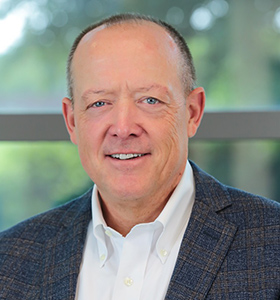
Dean Nelson is CEO of Cato Digital and the Founder and Chairman of Infrastructure Masons. His 36-year career includes leadership positions at Sun Microsystems, Allegro Networks, eBay, PayPal, and Uber. Nelson has deployed ten billion USD in digital infrastructure across four contents.
Since its founding in 2016, iMasons has amassed a global membership representing over 1.5 trillion USD in infrastructure projects spanning 130 countries.