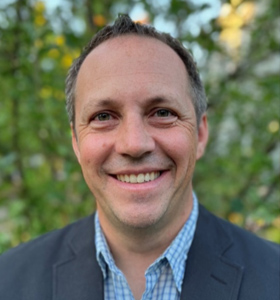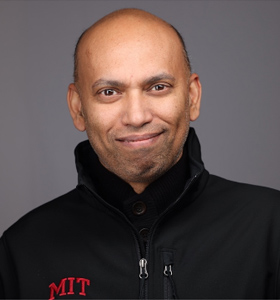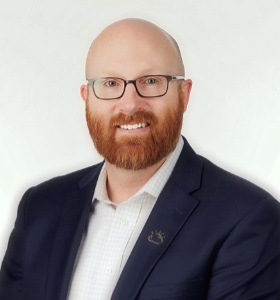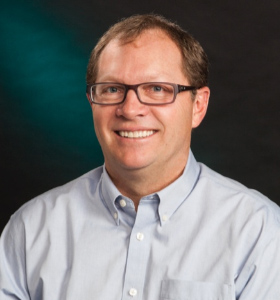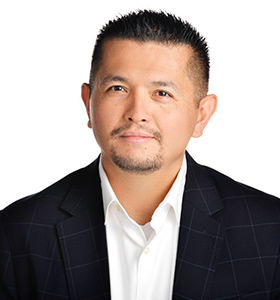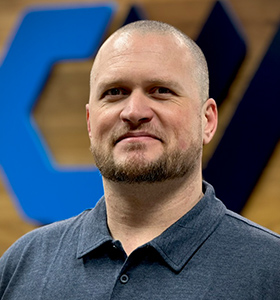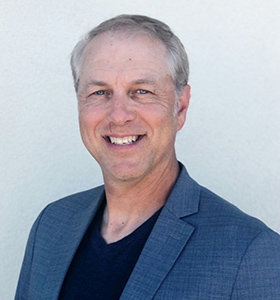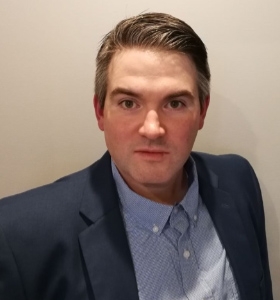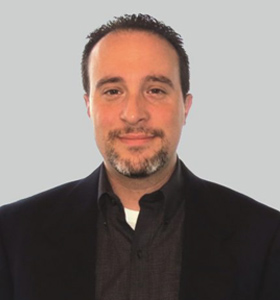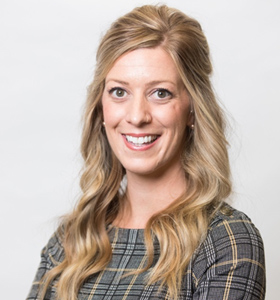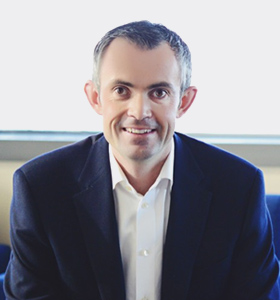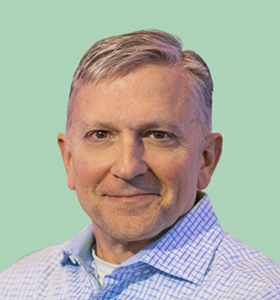

Since I left Microsoft almost two years ago, I have had lots of opportunity to reflect on the successes (and failures) in my career and how it has shaped me to where I am now and prepared me for where I think I am going in the future (which ironically seems even more exciting than the past). For me, the key to success has been the constant quest for learning. If I think about it, it’s about curiosity (wanting to know about everything), humility (realizing you are not the smartest person in the room), and most importantly, relationships. On the last point, it’s the people in my career that have really opened my eyes and disrupted my own thinking and beliefs.
This point leads me to one of my fundamental beliefs: In the later part of our career (and, frankly, in the early part of our career), we must always think about giving back by mentoring the next generation of leaders. But the truth of the matter is, the people I mentored have all been and are great mentors for me, even today. So, I would like to share some of the people who have fundamentally changed my thinking throughout my career, both as a mentor and as a mentee. This list, by all means, is not comprehensive, so I apologize in advance if I have left off some of your names. All of you know who you are, and my deep appreciation goes to every one of you!
Those Who Mentored Me
I have been fortunate to have many great mentors in my career—people whom I not only looked up to but also took the time to invest, in both teaching me and taking risks on my abilities. Again, there were many, but here are a few.
Laszlo Belady: I can’t say enough about my dad, who was my role model to the day he passed five years ago. He taught me to question everything, including my own perspectives. And most importantly, if your perspectives are challenged, you should rejoice when you find you are wrong and have learned something new. I remember as a child I would ask him questions on how something worked. He would never answer but instead ask me, “What is your hypothesis?” and then we would discuss. I did not realize this at the time, but this was a session rich with learning and how to think outside the box of what I knew. In fact, as I got older, my questions were more difficult, but I watched my father start learning from me, and occasionally, my answer was one which he hadn’t even thought of. Watching his excitement about a new perspective that wasn’t his taught me that we should always strive to learn something new even if it’s counter to our own belief systems. It’s not about just learning things that support your perspective; in fact, the true excitement is when your perspective is disrupted by something new—especially if it dramatically changes your worldview (what I call the epiphany). That is the true learning, and that is how breakthroughs happen. As a result of what my dad taught me, I am always on the quest for epiphanies, and thus, my obsession to “think bigger.”

Don Price: In the ’80s, I was a young engineer working for Don at Texas Instruments. Don was a full-time professor who ended up going into industry, and I was cursed to work for him (or so I thought). He required a thesis-level report on all of my work. Every report required an executive summary, hypothesis, procedure, results, analysis, discussion, and conclusion. Of course, for a young engineer, this level of detail was painful. No one on other teams had to do this type of reporting, but I did. Frankly, looking back now, Don forced me into two things that are essential in my mind for a successful career: critical thinking and superb communication of technical problem-solving. To this day, I love writing because of Don.
JP Kraus: In the late ’80s, JP was leading the effort on the kinetic energy missile program at Texas Instruments, and I was one of the engineers. He was a tough manager with aggressive deadlines, but I loved working for him. Watching the man develop relationships with generals and other top brass made me realize the importance of relationships, especially when dealing with complex technology where things can go wrong during development. This concept was a great learning experience for me. However, what still sticks with me was the time when I was working on a problem over the weekend to meet an aggressive deadline but it was clear there was no way to get it done. I will never forget what he told me: “Don’t tell me you can’t; tell me what you need: more money, more people, what? I will get it for you.” To this day, his question fundamentally changed how I thought and behaved. First, as an employee, it is my job to let my boss know what I need for the job. Second, as a manager, my job is to help provide what is needed. Third, when someone says it can’t be done, it triggers me to find a way to get it done. When you do, it’s euphoric!
Mary Cooley: In the mid ’90s, I had the good fortune to work for Mary Cooley soon after I was part of the Convex Computer acquisition by HP. At that time, I spent a significant amount of time reaching out to other organizations in HP to look for ways I could leverage the larger corporation. As a result, without knowing, due to my own ignorance, I had kick-started the integration into HP. Since I had reached the director level at HP, I was thinking of how to advance my career further and figured I needed to go into management. So, I spoke to Mary about my aspirations. She said, “I can make you a manager, but every site I go to, your name comes up as a great partner to work with. I need you to keep advocating for our organization to help integrate and influence the rest of HP.” Mary taught me that you can contribute at scale through developing relationships and that leadership is not the same as management. Leadership is about influence and inspiration, and that can be done as a manager or as an individual contributor. I never managed anyone in my 11-year career at HP; however, I was an influencer well before that became a term, thanks to Mary’s perspective.
Paul Perez: In the late ’90s, I was working at HP on high-end servers like Superdome. The density of these computers had reached levels that were unprecedented for data halls to handle. Typical racks were only 2kW at best, and we had a platform that was pushing 10kW at a time when raised-floor cooling was the only known way to cool enterprise data centers and was inadequate for Superdome cooling. Simultaneously, I partnered with Ericsson Power, who had a passive overhead cooling technology that used natural convection to cool network switch rooms at low densities. Collectively, my company and Ericsson Power patented forced overhead cooling that increased cooling density by tenfold, but we wanted to prove it. I had this idea to build a 500 sq.ft. data center with three rows of six racks with heat loads instrumented so I could measure the performance of the mini data center. It would be a 1.5 million USD data center test lab—the first of its kind, according to Ken Brill (more on him later), but I needed sponsorship. After two years of my proposal being turned down by our leadership, we had a reorg and received a new General Manager, Paul Perez. Two days into his new job, I went into his office to pitch my idea. After two years of rejection by others, Paul asked me one question: “Is it disruptive?” I told him yes, and then Paul, without hesitation, said, “Let’s do it!” I still think back to that day as the day my data center career started because I had just received a new boss who was not happy with the status quo. He knew we had to scale differently for what was to come. It did not stop there. What we learned from this work became the foundation of PUE, and even though Paul was no longer my boss by then, he sponsored PUE as one of four founders of the Green Grid to help make it a globally accepted metric. What Paul taught me was that, as leaders, we have to provide sponsorship and support for others ideas. I really can’t thank Paul enough for essentially changing my career path.

Ken Brill: As most of the older generation will remember, in the 1990s and 2000s, Ken Brill was one of the founders of the Uptime Institute, which one can argue was one of the most influential data center organizations in the late ’80s and ’90s. I always admired what Ken and the Uptime Institute did to drive guidelines by working with data center end users. In fact, I became a disciple of his server requirement guidelines and worked with the HP community to make all its servers Uptime compliant. Through the engagement we became good friends, and he always shared where the industry should go. We would take long walks and discuss the future. Ken, the industry titan that he was, would talk and I would just listen and learn. As time went on and my maturity grew, what started as a one-way street became more about debate and pushing boundaries. It was where I was starting to formulate my own vision for the future: He was inspiring me to think bigger, just as my dad had when I was a child. I realized Ken had become my industry parent. Then the devastating news hit: Ken had a terminal condition. With only a week left in his life, some of his friends had the opportunity to say goodbye (this definitely was one of the toughest things I have had to do). But even then, in his final days, Ken had taught me something even bigger than I could have imagined. While I wanted to reflect on the great times with him in the past, he kept taking the discussion back to the future of the industry. Ken was still worried about the future well beyond his own life. He was telling me about all the work that needs to be done, and no matter how much I wanted to reflect on the past, he was concerned about the work that would need to be done in the future without him. That conversation with him almost 15 years ago inspires me even today. What is the legacy we will leave behind, and how do we make the world better beyond our own lifetimes?
Dayne Sampson: In 2010, Dayne came from Yahoo to Microsoft to be Corporate VP of Global Foundation Services. At one point, one of his teams (the server/data center team) lost its leader, and as a result Dayne had been looking for a replacement. However, at that time, there were no qualified people available, and as a result Dayne asked me if I would consider it. My first response was, of course not. Other than small teams, I really had never managed people before. This team was global, and much of the role was to manage areas I had no experience in, such as data center operations and construction, but Dayne insisted. I finally accepted, and just like that, I was thrust into leading what would become one of the biggest data center footprints in the world. I owe Dayne not only for believing that I was capable of leading the team but also for mentoring me the whole way. He provided clarity with everything we did. Even the mission that every team member knew and still remembers to this day: “Site up and cost down!” Simple and easy for us to figure out what we had to do. Two things I learned from Dayne: Give people a chance to rise to the occasion, but continue developing and supporting them so they can grow. Additionally, provide clarity on the mission!
Those I Have Mentored
One of the things I have found in my career is that I love helping people. In the early part of my career, I had always loved working with interns and young engineers. As I got older and found success in my career, I became much more deliberate about mentoring to help the next generation in their careers and make an even bigger impact. The irony for me was that many of my mentoring relationships flipped because I ended up learning from them. I started seeing the effect that my father had taught me when I gave him an answer he did not expect. I call it the “mentee becomes the mentor.”
Again, by no means is this a comprehensive list, but it does give a flavor for how some people I have mentored have impacted me.

Roy Zeighami: I hired Roy out of graduate school into HP and then later again at Microsoft. For those of you who know Roy, he is a brilliant engineer who loves solving hard problems. When everyone is running “away” from the problem, Roy is running “to” the problem. This approach was why I always wanted him on my teams. So, needless to say, I have always had a strong interest in his career and have always been there to advise him throughout. However, what I absolutely loved about Roy from the day I met him almost 30 years ago was his fearless curiosity. He questions everything; he does not understand, and hierarchy does not matter to him. For him the mission is learning and preparing for the next problem. I loved this about Roy. Watching him had taught me early on to question everything, which reinforced some of the things my dad had taught me. So, when you see me asking questions somewhere, that is something I learned from Roy!
Sean James: From 2006–2007, Microsoft had tried to recruit me a couple of times, but I couldn’t understand what a software company wanted with a mechanical engineer. In 2007, I was finally convinced to join the data center / server team as a data center strategist to drive efficient design for the explosion that was about to happen for cloud. In my first three months, I was trying to figure out how I was going to add value. Then Sean James (who was a data center manager at that time) popped into my office. Our discussion generated some patents, but the part I will never forget is that at the end of our session, I was telling Sean how I marveled at our latest Quincy data center with chillers, but coming from HP, I knew that the servers didn’t need an environment so tightly controlled. So I told Sean, “I wish I could just put a bunch of servers in a tent.” He answered instantly, “Let’s do it!” As a result, we put a bunch of decommissioned servers in a tent behind the data center he managed and ran them for seven months through the rainy winter and then summer. The blog called “Tent City” went viral. Based on our findings, Microsoft went to airside economization, and the rest of the world followed. From that point on, Sean was my go-to guy for whenever I needed someone to “Just do it!” And just like JP Kraus, Sean does not accept that it can’t be done. The result is dozens of patents and tech pilots that changed the industry.
Katlin Chuzi: Kaitlin affected my thinking around communities and nature more than anyone else in my career. With a unique background in big data, systems thinking, and biomimicry, she now leads Global Land Strategy for Microsoft’s cloud infrastructure. She arrived with a conviction I’d never encountered in an engineering organization: Nature isn’t the scenery around our infrastructure; it is infrastructure. A week into working for us, she showed me the Coast Guard headquarters in Washington, DC, a building set into a hillside with contaminated street runoff flowing through its green roof and arriving clean at the wetland below. I asked the engineer’s question: “That’s great, but how often do I have to replace the soil in that roof?” Her answer changed my view forever. “You don’t get it, Christian. The organisms in the soil break down the toxins.” The roof wasn’t a filter that wears out. It was a living system that does work and gets better at it over time. That conversation sits upstream of everything I’ve since written about nature positive data centers (see the Interglobix Magazine article “Nature Positive Data Centers”): the shift from minimizing harm to designing mutualistic systems where the data center, the community, and the ecosystem each make the others stronger. It’s the infinite game where everyone wins. Kaitlin taught me to think more holistically, across system boundaries, in a way that stretched my worldview. This epiphany is exactly what my dad taught me to cherish—expanding your perspective and thinking bigger.

Brian Mattson: Brian was my procurement director for many years until he decided to go to another hyperscaler. While he was at Microsoft, we had great 1:1s that were stimulating, and I would always look forward to them. Long after that time, when both Brian and I had left our full-time jobs (Brian had left a year or two ahead of me), we reconnected. Brian became a great mentor for me when I was making the transition from Microsoft to become an independent board member / advisor for companies. I could not have made such a smooth transition from work without Brian’s mentoring and guidance. The best part was that he was doing this for others as well since he was one of the first to retire. What Brian taught me is that true fulfillment comes with giving back. And he is right!
Matias Alberola: I have all the time in the world to help the youth, particularly with career guidance. For me, it’s all about giving back. I met Matias through his mother, who connected us while he was in college. As with most students, I love their curiosity and positive energy. Frankly, they energize me. Matias was no different, and I loved his initiative. After a bit, we lost touch, and I figured he graduated and moved on with his life. Well, the story did not end there. One day, I received a text from Sean James with a picture of him standing next to Matias at some conference. It was great to see Matias. He had graduated and was three months into his job at Crusoe. It’s important to note that at the same time I had been trying to find a contact at Crusoe but to no avail. I spoke to Matias about my efforts, and he got me right to the person of interest. While the opportunity with Crusoe ultimately did not pan out, what I learned with Matias is that even though he was new to the industry and I expected nothing in return, these relationships become an important part of your network and can also have a serendipitous and positive impact on your life. Again, the point is that mentoring pays off. Again, it’s win-win.
Summary
First, a huge thank you to all of you who played a part in mentoring me throughout my career. The list of people certainly goes well beyond those mentioned here but are equally important. It has been truly an honor to work with and learn from all of you! For me, if you really think about it, every interaction is a mentoring opportunity. I have countless people who were my peers and were great mentors to me as well as me to them. Up, down, and sideways, mentoring is a two-way street. At the end of the day, mentoring is about sharing experiences, knowledge, and understanding. It’s about building relationships and networks to make the world a better place. I am grateful to have been mentored and to mentor, but for me the two are the same. I have always said that our success is measured by the success of those who follow, so embrace the opportunity to help the next generation!
ABOUT THE AUTHOR
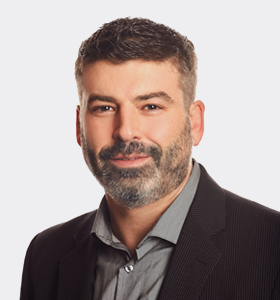
Christian Belady is highly experienced in managing data center and infrastructure development on a global scale. Currently, he is an advisor and board member of several companies in the infrastructure space. Previously, he served as Vice President and Distinguished Engineer of Data Center R&D for Microsoft’s Cloud Infrastructure Organization, where he developed one of the largest data center footprints in the world. Before that, he was responsible for driving the strategy and delivery of server and facility development for Microsoft’s data center portfolio worldwide.
With over 160 patents, Belady is a driving force behind innovative thinking and quantitative benchmarking in the field. He is an originator of the Power Usage Effectiveness (PUE) metric, was a key player in the development of the iMasons’ Climate Accord (ICA), and has worked closely with government agencies to define efficiency metrics for data centers and servers. Over the years, he has received many awards, most recently the NVTC Data Center Icon Award, and was elected to the National Academy of Engineering.