PART TWO
Welcome to the second article in a three-part series that explores careers in data centers through the lens of individuals who have served our nation in the military. Veterans represent about 35 percent of CoreSite’s employees in the data center operations area of the organization. Each of these men and women has made the transition to “civilian life,” and has a unique story to tell about that transition, what they learned in the service, and how their experiences apply to data centers. What follows are perspectives on data center operations from two veterans who are leaders of CoreSite’s operations teams—Jason Hasebroock and Miguel Ramos.

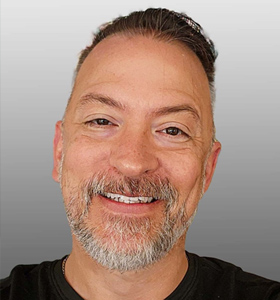
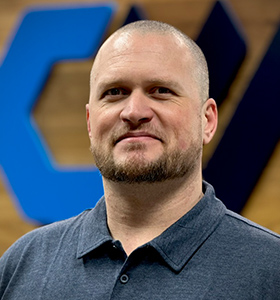
JASON HASEBROOCK
Senior Manager, Data Center Operations, Instructor, Navy Nuclear Power Training Unit
I’m from the ‘Middle of Nowhere’, Nebraska, and as a young man, I saw the military as a way to experience the world and gain skills I thought would serve me well in life. So I signed up, took the ASVAB exam—the Armed Service Vocational Aptitude Battery test that helps guide the types of jobs that are a good fit—and had the opportunity to choose the Navy Nuclear Program as my assignment.
The program was exciting and interesting, and as I said, had the potential to give me both new experiences and education. It was also pretty intense. I went through the Nuclear Power School training ‘pipeline’ as quickly as anyone can. Typically, there are short breaks between classes on reactors and thermodynamics, power and electronics and prototyping, for example. There were times when I’d finish one class on Friday and start the next on the following Tuesday!
I’d say that is one example of how military experience has prepared me for what I see in data center operations. Priorities can change quickly, and you need to be ready. ‘Prototyping’ is another prime example. The table-top training scenarios and hands-on drills we conduct to prepare for potential issues in our data centers closely resemble the prototyping exercises we performed on the U.S.S. George Washington, the nuclear-powered aircraft carrier I served on. The difference is that in the Navy, I trained and oversaw sailors operating a nuclear reactor simulator during both training and at sea. In contrast, in data centers I supervise technicians during drills, ensuring they follow procedures step-by-step when delivering services requested by our customers and addressing any problems that arise.
I guess I left out an important piece of information for the article. I was in the Navy for almost eight years and finished my career as an Instructor in the Navy Nuclear Power Training Unit. As Senior Data Center Operations Manager at CoreSite, I am responsible for the maintenance and operation of the electrical, mechanical, safety, security, and communications infrastructure, as well as any building support systems. I’m also responsible for training technicians and ensuring that all staff are qualified to perform required duties.
So, when you asked me about how my military experience applies to my role here in Denver, at DE1, my answer is that it’s easy to see the similarities in understanding the operations of critical systems. Moreover, it’s about more than just understanding how people react under pressure; it’s also about how they develop and approach situations, and how they respond in drills. What we learn from that gets applied to our processes, enabling us to continually refine them and streamline training. This, in turn, elevates the quality of our team’s responses.
The bottom line is that at the end of the day we all own that mission-critical environment whether the mission and environment is an aircraft carrier or a data center.

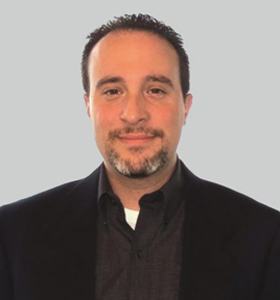
MIGUEL RAMOS
Senior Manager, Data Center Operations, Electrical and Environmental Technician, United States Air Force
Not many people choose to go into the military when they are 35, but I did. I was in sales and wanted a full career change, so I joined the Air National Guard. My focus was on E and E, electrical and environmental, and I trained to be an electrician and environmental tech working on F-16 fighter jets based out of New Jersey. Leadership and management were also part of that training. I was in the Guard for six years and ready to serve ‘on call’ for another two years, working on the jets on the airstrip attached to the Atlantic City airport.
An E&E Tech is responsible for inspecting, troubleshooting, and maintaining numerous systems that enable fighter jets to support missions and ensure pilot safety. When I consider what I learned in the Air Force and what I have learned in data center operations, it’s not a stretch to say that today’s jets are a lot like flying data centers. Hundreds of systems are essential to their operations, including computer chips, sensors, software, and networks that need to be capable of processing data in real-time.
In 2012, I landed a job at AWS, my first formal introduction to data centers, although not the first time I had been in a data center. That happened when I was a junior in high school. My dad was a driver for a company that manufactured server cabinets and occasionally delivered them to telecom providers located in New York. During the summer I worked with him. What I remember most about those deliveries is the cold facilities and the quick escort in and out by security personnel. Controlled environments and tight security remain central to data centers, which is part of our operational focus.
Fast forward to 2016, and I am on board at CoreSite as Lead Facilities Technician at VA1 and VA2. I was hired based on my experience at AWS, where I gained extensive knowledge of data center infrastructure from multiple vendors providing electrical and mechanical systems. Now, about 10 years later, I manage operations and the great team at VA3.
Of course, I’ve been thinking a lot about the idea behind this series. For me, the throughline encompasses both the systems expertise I gained through hands-on roles throughout my career and the emphasis on teamwork instilled in me during my service.

I had always been an individual contributor; as a salesperson, it was up to me to make my quota. When you join the military, you are part of a team. You realize that everyone brings something unique to the team and every action you take impacts the entire team. My approach to managing operations and my team extends that idea on a day-to-day basis. I mentioned that leadership and management were part of my training. I believe I’ve been successful as a leader because I listen to each team member and take action based on their input. We realize the difference it makes, even in small wins. I also listen to the leadership in all departments here in Virginia. I feel like I have almost an encyclopedia of knowledge at my fingertips.
I’m also hands-on. I support my team physically when needed, going into the field to hand them tools and hold power whips for them. Ultimately, that builds trust, which is essential because, as we’ve been talking about we work around high-voltage, mission-critical equipment. We need to be able to trust each other.
Lessons Learned
A consistent topic in the Military to Mission-Critical series is the data center industry’s appeal to the military. While Jason wanted to expand his horizons, Miguel’s motivation was quite different. Changing careers at 35 was primarily driven by the desire to provide more support for his family, an ethic his father and mother had instilled in him as he grew up.
But here’s what they have in common: they understand that operational excellence depends on high-functioning teams. Jason’s experience as a technician and instructor combined with his ability to apply what he’s learned in drills and every day on the job enables his team to keep DE1, one of the most interconnected data centers in the U.S., delivering precisely what our customers need.
Miguel’s disciplined leadership, combined with his openness to listen and mentor, motivates his team to make the VA campus-situated near “Data Center Alley”, the premier choice for enterprise and public-sector organizations seeking exceptional performance and security.That’s why he’s been recognized twice as a CoreSite “Star of Excellence” recipient.
We hope you enjoyed learning about Jason’s and Miguel’s journey in the data center industry. Look for the next in the series where we will focus on women veterans on the team at CoreSite.

ABOUT THE AUTHOR
Jason Hasebroock oversees the maintenance and operation of the electrical, mechanical, safety, security, and communications infrastructure-as well as all building support systems-at CoreSite, at the company’s DE1 data center in Denver. He is also responsible for training technicians and ensuring that all team members are fully qualified to execute their duties.
As an operations manager with over a decade of experience, Hasenbroock brings deep expertise in personnel management, training, operational administration, and electrical systems, electrical theory, safety, and maintenance. Prior to his current role, he built his career managing mission-critical environments, working his way through roles focusing on infrastructure reliability, compliance, and team leadership.
Known for his strong sense of ownership, urgency, and attention to detail, Hasonbroock is committed to optimizing system reliability and performance, developing high-performing teams, and maintaining the highest standards in operational excellence.
is responsible for overseeing the systems, processes, teams, and infrastructure involved in CoreSite’s data center operations with a focus on uptime, performance, and security. With expertise in strategic planning and communication, risk analysis, leadership development, and sound decision making, he anticipates, mitigates, and resolves complex technical and personnel problems.
Miguel Ramos oversees the strategic and day-to-day operations of the VA3 data center facility at CoreSite’s Northern Virginia campus, ensuring the optimal performance, reliability, and security of its critical infrastructure. He leads cross-functional teams responsible for hardware deployment, incident response, and maintenance, while driving operational excellence through automation, process improvement, and adherence to industry standards.
Prior to this role, Ramos held leadership positions in data-center operations and facilities management, where he gained extensive experience guiding teams and executing infrastructure upgrades. His focus on ownership and accountability drives his efforts to deploy and upgrade mission-critical systems to optimize efficiency, reliability, and customer uptime.
Ramos’ expertise spans internal and external customer service relations, and he is recognized for building high-performing teams and thriving in dynamic, hands-on environments.