Less than 15 years ago, commercial data centers were concentrated for colocation at Internet peering points, and customers for colocation services felt lucky if their data center provider had a facility within maybe 100 or 200 milliseconds. Other than financial transactions that required immediate posting and confirmation (though even early e-commerce sites needed response times that wouldn’t be acceptable by any standards today), most of the processing taking place inside those data centers could survive the data traveling 500 or even 1,000 miles.
So what changed? How did the Edge revolutionize the data center industry, and how is the blurring of the Edge upending the industry again so soon?
Well, a lot of things have changed in the past 10-12 years of data center development. Here are just a few:
- Video streaming required very low latency and simultaneously reduced network costs.
- Digital transformation created higher demand for cloud services with massive transaction rates.
- The volume and velocity of data associated with streaming, cloud, SaaS, social networks, and more all outpaced the original CDN architecture designed to facilitate content delivery, software downloads, and other data-intensive operations.
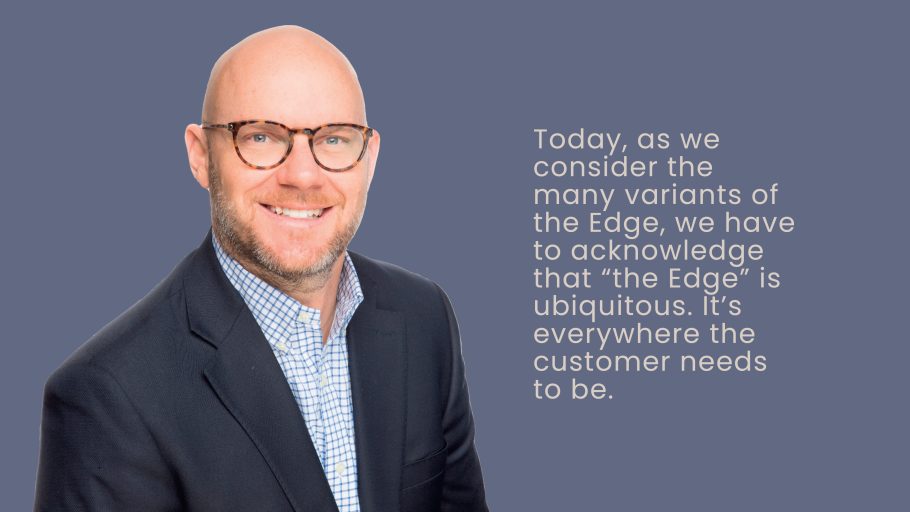
Soon, even the largest cloud providers were building data centers at or near what used to be referred to as “the Edge.” Today, as we consider the many variants of the Edge, we have to acknowledge that “the Edge” is ubiquitous. It’s everywhere the customer needs to be.
But the Edge is also elastic. It changes with the needs of its users. Businesses and consumers create new use cases constantly, and the Edge responds with new forms and new benefits. By contrast, older, private data centers are often less efficient, less sustainable, more expensive, and susceptible to faster obsolescence due to the rapid pace of advances in digital infrastructure technologies.
ABOUT THE AUTHOR
Phillip Marangella brings significant expertise to his role, drawing on 25 years of experience in international marketing, strategy, and business development across the data center, telecom, and technology sectors. In addition to his work with EdgeConneX, Marangella serves on the advisory boards for Lokker and Accelsius and is actively involved with the Data Center Coalition, Infrastructure Masons, and the Duke of Edinburgh Award Program. His leadership has earned him several accolades, including the PTC’23 Outstanding Diversity and Inclusion Champion Award for developing and mentoring HBCU Capstone Programs and the Datacloud Global Agent of Change Award in 2023. In addition, Marangella was honored at the Infrastructure Masons Champion Awards for Diversity, Inclusion, and Education in 2021 and was recognized by Data Centre Magazine as a top-ten marketing executive.
Before joining EdgeConneX, Marangella held key roles at companies like Equinix, Coresite, Verizon Business, MCI, Nortel, Globalstar, and Satphone. He also co-founded a tech consulting firm focused on international technology transfer and venture funding of university-developed technology.