
2025 was a turning-point year for subsea cable infrastructure. Not because more systems were being installed, but because the logic of routing, ownership, and strategy shifted. Cloud scale, AI workloads, and national-level digital resilience are driving a new build philosophy: designing corridors, not just systems. That theme dominated the successful SubOptic 2025 conference held in Lisbon, where the subsea community signalled that the race ahead will be defined by sovereignty, redundancy, and more innovative commercial models.
At the heart of that shift is a series of projects and developments that reflect this new mindset, new routes, new ownership models, regional ambitions, and new threats. The build map is still growing (TeleGeography’s 2025 submarine cable map shows—597 cable systems and—1,712 landings in-flight or active at the time of writing).
But what’s changed is what those systems are trying to do and how they’re financed, constructed, and conceived. One of the striking examples is the previously announced system by Meta called Project Waterworth or “W.” Unlike many previous builds that joined consortiums, W reflects a hyperscaler deciding “We will own and control the route that matters to us.” It is planned to stretch across multiple oceans, from the U.S. east coast to South Africa, India, Asia-Pacific and back to the Americas, a bold statement that digital-economy players are now drawing their own maps.
Yet not every major build is trans-oceanic. Within Europe, Unitirreno achieved Ready for Service status, becoming the first 24-fiber-pair system in the world. A planned project called IOEMA was quietly reinforcing Northern Europe’s compute corridor: the UK, Netherlands, Germany, Denmark, and Norway. It will be built to serve the cloud clusters and data center hubs already thriving there. Vodafone announced Kardesa, a Black Sea regional route connecting Bulgaria, Georgia, Turkey, and Ukraine—that bypasses traditional Russia-adjacent paths.

Subsea Specialist, LT Consulting
In the Gulf region, we see a different but equally decisive shift. The Fiber-in-Gulf (FIG) system, linking Qatar, Oman, UAE, Bahrain, Saudi Arabia, Kuwait, and Iraq, has been designed not just as a capacity play but also as a sovereignty and regional-loop play: intra-GCC data flows, fewer dependencies on distant nodes, and resilience built in. 2Africa Pearls also progressed throughout the year, reflecting how regional digital ecosystems are maturing and seeking their own digital spines.
Then there’s the Mediterranean workhorse: the Medusa cable system. Already progressing with several new landings in 2025, it is now taking an expanded role and will extend along the West Coast of Africa. At the EU’s Global Gateway Forum in October 2025, the European Commission committed to supporting Medusa’s expansion into the Middle East (including landing opportunities in Jordan) as part of building digital resilience across the EU-MENA corridor. And in October, the landing deal for Syria was signed, making Medusa the first international submarine cable landing there.
Across the globe, we have seen the Humboldt agreement signed, E2A construction initiated, MIST announced, TAM-1 build continue, and the list goes on. These projects reflect a common theme: connectivity with intent. Not just “more fiber,” but fiber placed where it changes the map.
Geopolitics And The Shifting Risk Landscape
In 2025, submarine cable infrastructure has become a strategic flashpoint amid escalating geopolitical tensions. Russia’s war against Ukraine and China’s assertive posture toward Taiwan have heightened concerns over sabotage and surveillance targeting undersea networks. Undersea cables are increasingly viewed as vulnerable assets in hybrid conflict scenarios.

Analysts warn that sabotage threats and limited repair capacity pose increasing risks to the world’s submarine cable infrastructure. With many regions lacking route diversity and the global fleet of repair vessels remaining relatively small, any accidental or deliberate damage could result in prolonged outages that disrupt critical communications and economic activity. At the same time, a growing share of cable systems is now privately owned, prompting concerns around ownership and control. This shift raises new questions about accountability and resilience, and governments are reassessing how to balance commercial interests with broader national security priorities.
Policy responses are beginning to emerge. The New York Principles on Undersea Cables, endorsed by 30 nations including the U.S., the EU, and Australia, represent a move toward collective action. These principles aim to enhance cable security, improve transparency, and strengthen legal protections. However, critics argue that the current approach remains too narrowly focused on national security rather than addressing the full spectrum of operational and commercial risks. Europe, in particular, is undergoing a strategic rethink. Policymakers are examining how to secure regional cable routes, diversify landing points, and reduce reliance on non-EU infrastructure providers as part of a broader effort to protect digital sovereignty.
As the digital backbone of global communications, submarine cables are no longer seen merely as technical assets; they have become geopolitical instruments. The quiet redrawing of the cable map in 2025 reflects a strategic recalibration of global power.
Marine Maintenance: A System Under Strain
As global reliance on submarine cables intensifies, the marine maintenance sector is struggling to keep pace. A projected 48% increase in total cable kilometers by 2040 is colliding with an aging fleet of cable repair ships, two-thirds of which will reach he end of their lifespans within the next 15 years. This mismatch between infrastructure growth and repair capacity has become a strategic concern for operators, insurers, and governments alike.

Key shifts in marine maintenance in 2025 include:
- Fleet modernization urgency:
The global cable ship fleet is aging, with many vessels nearing retirement. Replacement programs are lagging, raising fears of longer outage and regional repair bottlenecks; however, change is afoot: OMS announced the investments in two to four new cable ships at the end of 2024. Megamas Resources ordered two cable lay vessels in June 2025. And in November 2025, Orange Marine announced the construction of two next-generation cable ships, aiming to bolster maintenance capacity and enhance network resilience across Europe, Africa, and the Middle East.
- Regional disparities:
Asia-Pacific and Africa are experiencing rapid cable expansion but lack proportionate repair coverage. This situation has led to calls for localized maintenance zones and new depot strategies.
- Technological upgrades:
Operators are exploring AI-driven fault detection, autonomous inspection drones, and predictive analytics to reduce downtime and improve response times.
- Contractual evolution:
Maintenance agreements are being restructured to reflect higher fault rates, climate-related risks, and geopolitical disruptions. Some regions are shifting toward multi-operator consortia to share costs and resources.
- Investment gap:
Despite booming cable deployments, maintenance funding remains flat. Industry leaders warn that without targeted investment, the resilience of global connectivity could be compromised.
Marine maintenance is no longer a back-office function; it’s a frontline issue in digital infrastructure strategy.

From Fiber To Strategy
On the technology side, the thematic shifts are clear: SDM (Space-Division Multiplexing) is moving into standard build practice. Larger systems are being designed with many more fiber pairs to drive cost-per-bit down and future-proof for AI/compute demands. The “open cable” business model is commonplace, and this all flows into a new playbook—build where the compute is, treat submarine capacity as strategic infrastructure, integrate launch and landing into the regional digital-ecosystem strategy, and design for resilience as much as throughput.
While the excitement is in the builds, the risks are real. The Red Sea disruptions reminded us that routing matters. A fault or sabotage doesn’t just cost days of repair; it reroutes entire regional digital economies. Supply-chain localization (e.g., ZTT’s Saudi factory) matters. Regulatory review matters. As does geopolitics, the Middle East region is now a chokepoint in multiple digital corridors with both commercial and national-security implications. For operators, investors, and governments, three imperatives stand out:
- Land where the compute is or is going; short haul to major cloud hubs (IOEMA style) or direct long routes when you control demand (W style).
- Build autonomy and platform-like flexibility; regional systems (FIG), neutral open systems (Medusa), and SDM models reduce entry-level cost.
- Plan for resilience and sovereignty; diverse routes, local manufacturing, repair readiness, regulatory navigation, cybersecurity, and physical protection.
In the end, 2025 was not just about subsea cables. It was about redrawing charts beneath the surface. The systems we build today will decide which regions become digital hubs, which remain transit lines, and which become the high-capacity backbones of the AI era. The submarine cable map is still expanding, but what’s changing is how it’s being drawn. In the years ahead, the question won’t be “Do we have enough fiber?” but “Do we have the right corridors, the right capacity, the right landing strategy, and the right commercial model to win?”

ABOUT THE AUTHOR
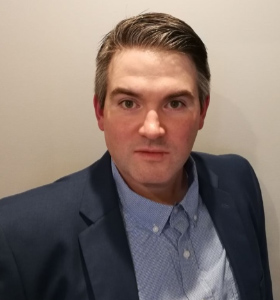
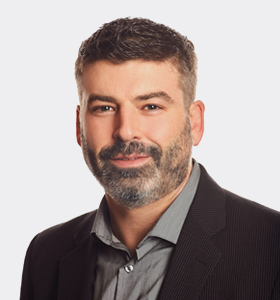
Eckhard Bruckschen, Director of Undersea Cable Consultancy, is a master mariner and MBA holder with more than 30 years of experience in the offshore submarine cable industry. His experience includes ploughing and trenching/ROV operations; remedial works; installations of fiber optic, power, umbilical, and flexible pipes; and burial and bridge operations. Throughout his career, Bruckschen has managed the construction of over 40,000 kilometers of submarine fiber optic cables and 2,500 kilometers of submarine power cables.
Lynsey Thomas, Subsea Specialist involved in the global subsea industry since 1995, and has directed LT Consulting since 2018. She has a keen interest in corporate strategy development, network planning, project management, and solutions marketing. She is experienced in customer, supplier, consultant, director, and trustee roles. Thomas has held senior positions at Cable and Wireless, Apollo SCS, Xtera, and SubSea Networks Ltd., and is a board member of Cirion Technologies. She holds a master’s degree in engineering science from the University of Oxford.