
The last decade has quietly reset the foundations of the global economy. As the world becomes more digital, more connected, and more AI-driven, data centers have moved from being support infrastructure to becoming the beating heart of modern life. Every video streamed, every cloud application launched, every AI model trained, every real-time payment cleared—all of it flows through data centers. At the core of this reality lies one critical question: how do we deliver fast, reliable, and increasingly clean backup power at unprecedented scale?
The Scale of the Data Center Surge
According to the International Energy Agency (IEA), global data centers consumed around 415TWh of electricity per year in 2024, with demand projected to more than double to ~945TWh by 2030, largely driven by AI workloads. AI-optimized accelerated servers are growing at roughly 30 percent annually, accounting for a significant share of this increase. To ensure resilience, modern data centers deploy multiple high-capacity backup generators—typically 2–4MW each—aggregated to match site load and redundancy requirements. In large or multi-tier facilities, backup power systems exceeding 50MW are commonly installed to support mission-critical operations and deliver very high uptime.
ABOUT THE AUTHOR
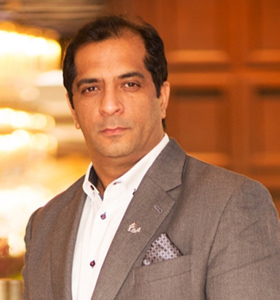
Sanjay Jadhav is the CEO of Sterling Green Power Solutions Pvt. Ltd. (SGPS), a part of the Sterling & Wilson Group. He leads the company’s strategic vision and global growth with a strong focus on technological integration. Since joining Sterling and Wilson in 2009 and becoming CEO in 2016, he has overseen SGPS’s entire value chain, including one of Asia’s largest diesel generator manufacturing plants in Silvassa, India, and expanded its footprint across Africa, the Middle East, and Southeast Asia with gensets, E-houses, and custom-built solutions. Under his leadership, SGPS has powered landmark projects such as Delhi and Mumbai International Airports, Delhi Metro, Bangalore Airport, SAIL, and RBI data centers, while also incubating new EV charging and hydrogen businesses.
Jadhav began his career at Philips India and later held leadership roles at GE. He also has an engineering degree from Walchand Institute of Technology and an MBA from IBS, Bengaluru. He draws inspiration from Japanese quality and manufacturing practices.